
ANCIENT IRAQ · 10 DAYS / 10 NIGHTS
Civilizations & Crossroads
A journey through Iraq’s great civilizations.
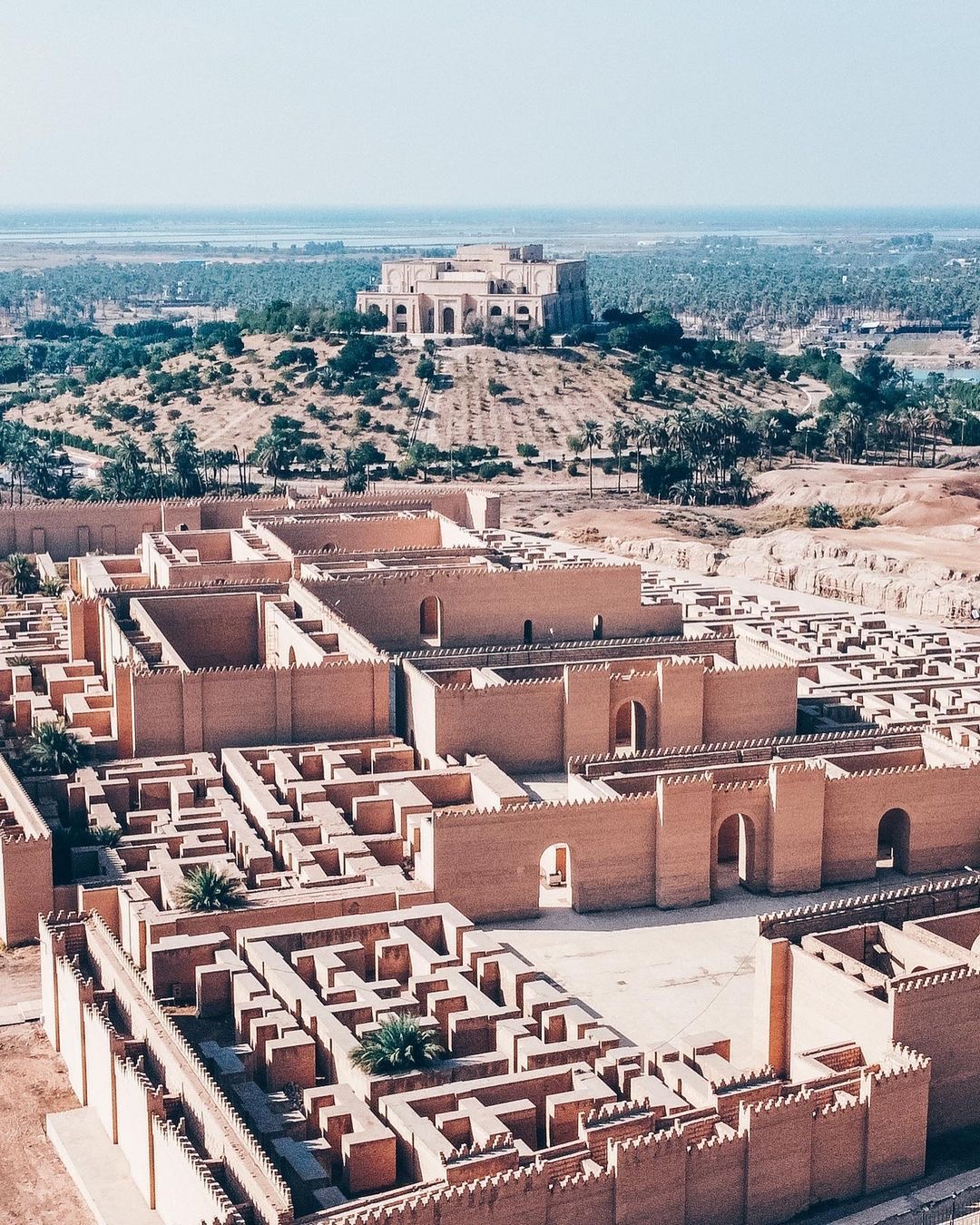
The journey
Ten days from Basra to Erbil, through the Iraqi marshes, Sumerian cities and the sacred sites of Najaf and Karbala. Explore Baghdad and Samarra, then continue to Hatra, Mosul and the heritage of the Nineveh Plain. Finish with Erbil’s citadel and bazaar, and the prehistoric discoveries of Shanidar Cave. Stay ten nights, with departure from Erbil on Day 11.
Day by day
10 touring days · 10 nights · Departure on Day 11
Day 1Arrival in Basra & the Iraqi marshes
Arrive in Basra and head to the Iraqi marshes for a full day of exploration, then continue to Nasiriyah for the night.
- Iraqi Marshes
Discover a landscape of reed beds and waterways shaped by the Tigris and Euphrates. These wetlands shelter migratory birds and help explain the watery environment in which southern Mesopotamia’s early cities grew. The visit introduces the marsh communities and their close relationship with the water.
Overnight in Nasiriyah
Day 2Ur & Girsu: cities of ancient Sumer
Visit two important Sumerian cities before returning to Nasiriyah for a second night.
- Ancient city of Ur
Explore the remains of a major Sumerian city, dominated by its monumental ziggurat. Dedicated to Nanna, the moon god, this stepped sanctuary dates back more than 4,000 years. Ur once stood beside a watery landscape, a striking contrast with the dry plain surrounding its ruins today.
- Ancient city of Girsu
At modern-day Tello, discover a Sumerian city revered as the sanctuary of the god Ningirsu. Clay tablets recovered here record workers, supplies and the running of temples, offering an unusually personal view of ancient administration. These everyday records reveal how a complex city functioned thousands of years ago.
Overnight in Nasiriyah
Day 3Eridu & Uruk: the rise of cities
Explore Eridu and Uruk, then continue north to Najaf for the night.
- Ancient city of Eridu
In Sumerian tradition, Eridu was the first city and the home of the god Enki. Archaeologists uncovered a succession of temples beneath its mound, showing how sacred places were rebuilt over generations. Its weathered remains invite you to imagine a settlement once closely connected to the marshes.
- Ancient city of Uruk
Explore one of the great centres of early urban life, where monumental temples and organised administration transformed human society. Uruk is closely associated with the beginnings of writing: early records helped officials keep track of goods and resources. Its extensive ruins reveal the scale of the first cities.
Overnight in Najaf
Day 4Sacred Najaf & Ukhaidir Fortress
Begin with Najaf’s shrine and cemetery, then visit Ukhaidir Fortress before continuing to Karbala.
- Imam Ali Shrine
Visit the spiritual heart of Najaf, where Ali ibn Abi Talib, the Prophet Muhammad’s cousin and son-in-law, is believed to be buried. The shrine helped shape Najaf’s growth into a major centre of pilgrimage and religious scholarship. Its courtyards offer a glimpse of the city’s living traditions of devotion.
- Wadi al-Salam Cemetery
Known as the Valley of Peace, Wadi al-Salam is one of the world’s largest cemeteries and has been used for burials for centuries. Family tombs, raised graves and underground vaults reflect different burial traditions. Its close connection with Imam Ali’s shrine makes it especially significant to Shia Muslims.
- Ukhaidir Fortress
Explore an imposing Abbasid palace and fortress dating to the eighth century. Behind its massive outer walls lie courtyards, reception spaces, living quarters and a mosque, revealing how defence and palace life were combined. Its position on a historic trade route also connects it to the journeys of merchants and caravans.
Overnight in Karbala
Day 5Karbala, Taq Kasra & historic Baghdad
Visit Imam Hussain’s shrine in Karbala, continue to Taq Kasra, then explore Baghdad’s literary streets and Abbasid heritage.
- Imam Hussain Shrine
Discover the shrine of Hussain ibn Ali, the Prophet Muhammad’s grandson, who was killed at the Battle of Karbala in 680 CE. His story gives the city its enduring importance in Shia Islam. The shrine remains a major place of pilgrimage, bringing history and present-day religious life together.
- Taq Kasra
See the monumental brick vault of ancient Ctesiphon, once an imperial capital of the Sasanian Empire. The vast arched hall belonged to a palace complex and is an extraordinary example of building with brick on a grand scale. Its silhouette preserves a glimpse of Iraq’s history before the Islamic era.
- Al-Mutanabbi Street
Explore Baghdad’s celebrated bookselling street, named after the tenth-century poet Al-Mutanabbi. Bookshops, outdoor stalls and cafés have made it a gathering place for readers, writers and artists. It is a lively introduction to the city’s literary identity and its enduring love of poetry and debate.
- Al-Rasheed Street
Walk along one of historic Baghdad’s best-known streets, recognised for its colonnades and old commercial buildings. Look beyond the shopfronts to notice the architectural details that give the street its character. Its trading activity and café culture offer a different chapter of Baghdad’s story from the ancient sites visited earlier.
- Al-Mustansiriya Madrasa
Discover a great Abbasid centre of learning founded by Caliph Al-Mustansir and completed in 1233. Its teaching brought together the four Sunni schools of law alongside subjects such as medicine and mathematics. The building recalls a time when Baghdad drew students and scholars from across the Islamic world.
Overnight in Baghdad
Day 6Baghdad: ancient kingdoms & spiritual heritage
Visit the ziggurat at Aqar Quf, then return to Baghdad for the Iraqi Museum and Maruf al-Karkhi Shrine.
- Aqar Quf — Dur-Kurigalzu Ziggurat
Visit the towering remains of Dur-Kurigalzu, a city founded by the Kassite king Kurigalzu I in the early fourteenth century BCE. The ziggurat was dedicated to Enlil. Look for the layers of reeds within its mud-brick core: ancient builders used them to bind and reinforce the structure.
- Iraqi Museum
Explore a collection that brings together the civilisations encountered along the route, from Sumer and Babylonia to Assyria and the Islamic era. Sculpture, inscriptions and everyday objects reveal how people worshipped, traded and lived. Seeing these objects together helps connect the archaeological landscapes with the people who once inhabited them.
- Maruf al-Karkhi Shrine
Visit the shrine associated with Maruf al-Karkhi, an early Sufi figure who lived in Baghdad during the Abbasid period. Remembered for his devotion, he holds an important place in Sufi traditions of teaching passed from master to disciple. The visit introduces another strand of Baghdad’s rich spiritual heritage.
Overnight in Baghdad
Day 7Samarra, Hatra & the road to Mosul
Travel north from Baghdad to the great mosques of Samarra, continue to Hatra, then finish the day in Mosul.
- Great Mosque of Samarra
Discover the ninth-century mosque and its famous Malwiya spiral minaret, a landmark of the Abbasid capital. Its vast scale reflects the power and ambition of the empire. Samarra preserves the layout of a city whose architecture and decorative arts influenced buildings across the Islamic world.
- Abu Dalaf Mosque
Explore another monumental mosque from ninth-century Samarra, with a large open courtyard, arcades and its own spiral minaret. Its smaller tower offers a fascinating comparison with the Malwiya. Together, the two mosques show how Abbasid builders used repeated arches, open space and distinctive minarets to shape places of communal worship.
- Ancient city of Hatra
Explore a fortified desert city that flourished under Parthian influence, where monumental temples combine Greek, Roman and local traditions. Hatra’s defences resisted Roman attacks in 116 and 198 CE. Its great vaulted halls reveal how this meeting point of trade and religion developed a distinctive architectural identity.
Overnight in Mosul
Day 8Mosul, Nimrud & Bakhdida
Explore Mosul’s old town, the Assyrian site of Nimrud and Bakhdida before returning to Mosul for the night.
- Mosul Old Town
Explore historic lanes shaped by Mosul’s role as a meeting point between regions and communities. Its architecture brings together Islamic and Christian influences, reflecting the city’s diverse past. Restored houses and religious landmarks also tell a recent story of local craftsmanship, cultural recovery and the rebuilding of everyday life.
- Nimrud
Discover the remains of Kalhu, the Assyrian capital developed by King Ashurnasirpal II in the ninth century BCE. Excavations here revealed royal palaces, elaborate reliefs and rich tombs that transformed our understanding of Assyrian court life. The surviving ruins place these discoveries within the landscape of a once-powerful imperial city.
- Bakhdida (Qaraqosh)
Visit a historic Christian town on the Nineveh Plain, also known as Qaraqosh. Its Assyrian community preserves a local form of Neo-Aramaic alongside longstanding church traditions. Exploring the town adds a living cultural dimension to the journey, connecting the region’s ancient past with the languages and faiths of its communities.
Overnight in Mosul
Day 9Lalish & the heritage of the Nineveh Plain
Visit Lalish, Alqosh, Sennacherib’s waterworks and Mar Mattai Monastery, then continue to Erbil.
- Lalish Temple
Enter the sacred valley at the heart of the Yazidi faith, known for its distinctive conical temple roofs. The sanctuary contains the tomb of Sheikh Adi and draws Yazidi pilgrims from around the world. Its shrines, symbols and mountain setting introduce the beliefs and traditions of this religious community.
- Alqosh Village
Explore a historic town at the foot of the mountains, closely associated with Assyrian Christian heritage and the Chaldean Catholic tradition. Neo-Aramaic is part of its living cultural identity. The surrounding landscape and traditional streets offer a glimpse of community life rooted in the northern plains over many generations.
- Sennacherib’s Dam
Discover ancient Assyrian waterworks associated with King Sennacherib, whose vast network of canals and aqueducts supplied Nineveh. Built around the turn of the seventh century BCE, these projects carried water across a challenging landscape. They reveal the planning and construction skills needed to support a great imperial capital.
- Mar Mattai Monastery
Visit the Syriac Orthodox monastery on Mount Alfaf, whose origins are traditionally dated to the fourth century. Mar Mattai became an important centre of learning, known for its scholars and Syriac manuscripts. Its mountain setting adds a striking backdrop to the story of Christianity in northern Iraq.
Overnight in Erbil
Day 10Erbil’s citadel, bazaar & Shanidar Cave
Explore Erbil Citadel and the bazaar, then travel to Shanidar Cave before returning to Erbil for your final night.
- Erbil Citadel
Discover a historic settlement raised above the city on a mound built up by generations of occupation and rebuilding. Known in antiquity as Arbela, Erbil was an important Assyrian centre. The citadel’s imposing outer silhouette is formed largely by nineteenth-century house façades, concealing much older layers beneath.
- Erbil Bazaar (Qaysari)
Browse the covered market below the citadel, where narrow lanes link rows of small shops. Different sections specialise in particular goods, making the bazaar a place to discover local foods and everyday trading traditions. Its honey, dairy products, sweets and tea culture bring Erbil’s living heritage into focus.
- Shanidar Cave
Visit the mountain cave whose Neanderthal discoveries reshaped the study of prehistoric life. Human remains and archaeological evidence from Shanidar have prompted research into survival, care for injured individuals and the treatment of the dead. The site takes the journey far beyond the first cities, into the deep human past.
Overnight in Erbil
Day 11Departure from Erbil
Depart from Erbil after ten touring days and ten nights exploring Iraq’s ancient cities and living heritage.
Your route
Loading your route…
Select a stop to explore. Lines show the itinerary, not driving directions.